If Presbytery shall stand?
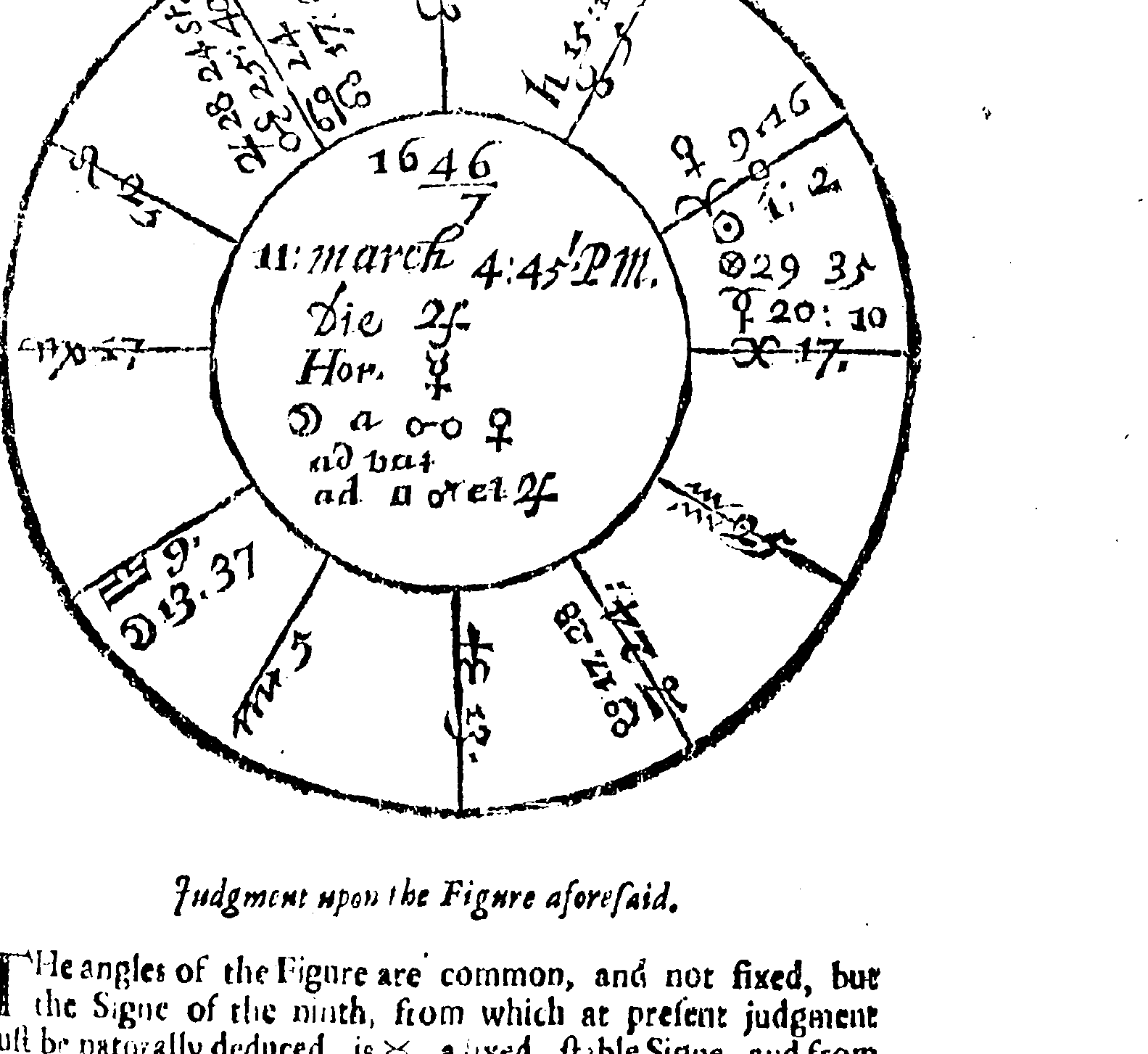
What this is
Judgment upon the Figure aforesaid. THe angles of the Figure are common, and not fixed, but the Signe of the ninth, from which at present judgment must naturally deduced, is ♉, a fixed, stable Signe, and from ♄ in the Termes of ♃, who is therein posited, a slow and ponderous Planet, ♃ a generall Significator in Religion: Religious Rites and Ceremonies is now standing to Direction; and is departing out of his Exaltation, having been a long time Retrograde therein, and now at present impedited by ♂: after his transit out of ♋, he enters the fixed Sign ♌, and into the Term of ♄; but in the first six degrees thereof he meets with severall obnoxious fixed Starres, and thence passes into the Terms of ♄, who is now in the Signe ♓ his Fall; yet angular, entred into the Decanate of ♂. We find ♀ Lady of the ninth house in ♈ her Detriment, and in the eighth of the Figure, but twelfth house from her own, viz. ♉, now the cusp of the ninth: and if you observe ♀ well, she hath one and twenty degrees to passe through the Signe of ♈, and these degrees all in the eighth house, ere she get into ♉, where she may possible fix, or at least would; but before she fully get out of this moveable Signe ♈, the first hath recurse to the sinister □ of ♄, all three in the Termes of ♄ of Exaltation: this might have produced some material effects, if ♄ had been essentially Fortified where he is, or if Presbytery had any relation to Monkery, or if it had been the first beginning of a Religious Order. Let us take all the Planets as posited, and there's not a Planet fixt except ♄, nor any essentially dignified but ♃, and he impedited by ♂; the ☽ is entring via combusta, ♂ is in his Fall, ♀ in her Detriment, will distaste it. We have the ☽ separating from ♀ in the eighth, then going to be vacua cursus, afterwards she squares with ♄ then with ♃: From these configurations we shall naturally frame our judgment, not positive or affirmative, but conjecturall, one struggle out of a desire that posterity may see there's some verity in Astrology, and the Clergies just cause to carp at the Art, if I wrangle: We so hope herein, that we shall no more offend in writing the Astrall intention of the heavenly bodyes, ( deduced from reasons in Art) then those who daily ( plenore ) and publickly deliver amongst hundreds their conceptions, though repugnant to the opinion of very many now alive. The posture of ♄ in the ninth who is naturally of a severe, surly, rigid and harsh temper, may argue, the Presbytery shall be too strict, sullen and dogged for the English Constitutions, little gentle or compliant with the natures of the generality, and that there all manner of Questions. 441 shall spring up amongst themselves many strange and fearfull opinions and distractions even concerning this very Presbytery now mentioned, that they shall grow excessive Covetous, contentious, and desirous of more then belongs unto them, worldly, envious and malicious one against another; that amongst them some Juniors represented by ♀, shall be but of light judgment, wave and decline the strictnesse of this Discipline; that the Elder, represented by ♄, shall not be respected by reason of their too much rigidnesse, or shall their Orthodox opinions be consented unto. ♄ is Peregrine, Occidental, &c. fortified by no essentiall Dignity, or supported with the favourable aspect of either of the Fortunes; there's Reception betwixt the ☽ and him, but no aspect: ♀ Lord of the tenth signifying Authority, is separated and separateth apace from ♄, as if the Gentry, or supreame people of this Kingdom, do in part decline from the severity of the too too austere Clergy or Presbytery, mistrusting a Thraldom rather then a Freedom to ensue hereupon. If you would know who shall most afflict, or who shall begin the dance, or most of all oppose it? ♄ represents the Countryman, for he afflicting the house properly signifying Presbytery, shews the cause; this in few words expresses, it will not stand ( continue stat quo) Remayne ♄, viz. Covetousnes, Rigidnes, Maliciousnes, &c. then there may be more hopes that it might, yet it will not stand ( ita in fata. ) Three whole yeers from hence shall not pass, ere Authority it self, or some divine Providence inform our understanding with a way in Discipline or Government, either more neer to the former purity of the primitive times, or most beloved of the whole Kingdom of England, or Authority shall in this space of time moderate many things now stifly desired: For some time we shall not discover what shall be established, but all shall even as When there was no King in Israel, a confusion amongst us shall yet a while remain: the Souldiery then, of some men of fiery Spirits will arise, and keep back their Contribution from the Clergy, and will deny obedience or submission to this thing we call Presbytery; it will then come to be handled by the Magistrate, and taken into consideration by the grand Authority of the Kingdom; yea, and by the plurality of the Clergy-men of England, or men of very sound judgments, it will be contradicted, disputed again, disapproved; and these shall make it manifest, this very Presbytery now maintained, is not the same the Common-wealth of England will entertain as a standing rule, so fit to live under, or be governed by. From what I do finde by this Figure, I conclude, that Presbytery shall not stand Herein England ( stat quo, ) without refining and amending and demolishing many scrupulous Rites urged at present by the Clergy; for if we consider ♃ as Lord of the fourth, We finde the ☽, in plain language, (after a little being void of course) run hastily to the □ of ♄ and ♀ intimating the Commonalty will defraud the expectation of the Clergy, and so strongly oppose them, that the end hereof shall wholly delude the expectation of the Clergy.
Correspondences
- cast for
- 11 March 1646, 7, 4:45 PM
Where this comes from
- William Lilly, Christian Astrology (1647)