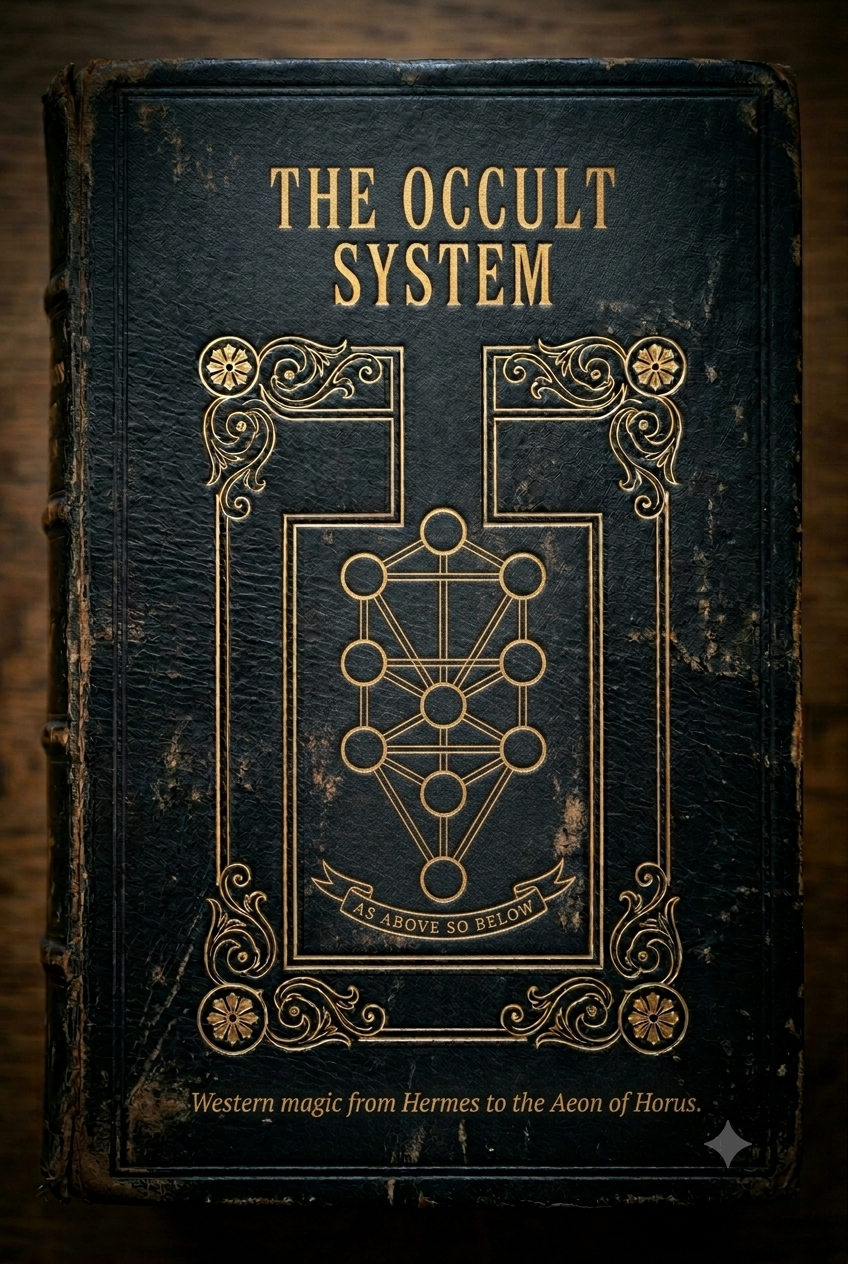
THE SYNCRETICON OCCULT SYSTEM
A single operational reference for the whole of the Western occult tradition. The book’s aim is to set the rites out in the form the tradition has carried them, to trace each line of philosophy to its actual origin, to credit the hands that tied each knot along the way, and to make the thread that runs through them visible. A working library for a working operator.
This is a new book, not a reprint. The tradition from which it is assembled is the longest continuous stream of recorded human effort there is — from the Pythagorean fraternities of the sixth century BCE through the Alexandrian schools, the Hellenistic magical papyri, the medieval Solomonic grimoires, the Renaissance Hermetic revival, the Baroque Rosicrucian pamphlets, the nineteenth-century French occult revival, the Golden Dawn and its heirs, Crowley’s Thelemic system, Bardon’s German path, the mid-century Wiccan revival, Kenneth Grant’s Typhonian current, and the chaos magicians of the last half-century. Twenty-five hundred years of practitioners, most of them working in small groups or alone, most of them leaving very little, a few of them leaving a great deal. The Syncreticon has read what is left, and what follows is an attempt to set it out, complete, in one voice.
The rites themselves are given in the forms the tradition has carried. An operant formula, once a line of practitioners has worn a shape into it over a century or five, is not to be rewritten casually, and this book preserves the ritual texts as received. The Qabalistic Cross runs as Mathers shaped it; the Bornless Invocation as Crowley received it; Abramelin’s prayers as Mathers translated them. What is new here is the teaching around the rites — the history, the commentary, the placing of each practice inside the larger chain — and that teaching is the Syncreticon’s own writing throughout. Where another author’s wording stands best, that author is named and the reader sent to them directly; their phrasings are not smuggled into the prose.
The shape of this book. Twenty-six Parts, one hundred and fifty-one Books, and twelve Appendices.