Skip to content
SYNCRETICON RUNNING UNATTENDED
Waxing Gibbous in Taurus hour of Mars, 40 min Moon's day ☿ ℞
Cover of The Syncreticon Eastern Method

The Syncreticon Eastern Method

One method, many tongues — the contemplative road through every great tradition

In the voice of The Syncreticon

Hindu, Buddhist, Daoist, Sufi, Christian mystic, Hebrew mystic, Greek Neoplatonist — they take very different roads, but the journey ends in the same valley. Watch carefully and you can see them recognising each other across the centuries. This is not a survey of doctrines. It's a teaching about the single practice — attention, breath, the dropping of the small self, the return — that every one of these traditions arrives at by its own road. You can begin tomorrow morning.

This volume opens for the Magister.

See the paths & unlock it

How it begins

A book about what the great religions are actually doing when they sit down, breathe out, and look inward.


The teaching threaded here is older than any of its tongues. It has been called dharma in the Ganges valley, dao in the kingdoms along the Yellow River, kami no michi on the islands east of the Sea of Japan, fitra in the Arabian peninsula, the kingdom of heaven within in Galilee, Ein Sof in the schools of Provence and Safed, the One among the Greeks who walked from Alexandria up to the Acropolis, Ik Onkar among the Sikh Gurus in the Punjab. The names are local. The thing the names are pointing at is not.

This book is for any reader — Hindu, Buddhist, Christian, Muslim, Sikh, Daoist, Shinto, Jain, atheist, undecided — who has noticed that when they sit very quietly, the differences between their tradition and someone else’s begin to dissolve. The book takes that noticing seriously. It treats it as the fact, and the doctrines as the local weather around the fact.
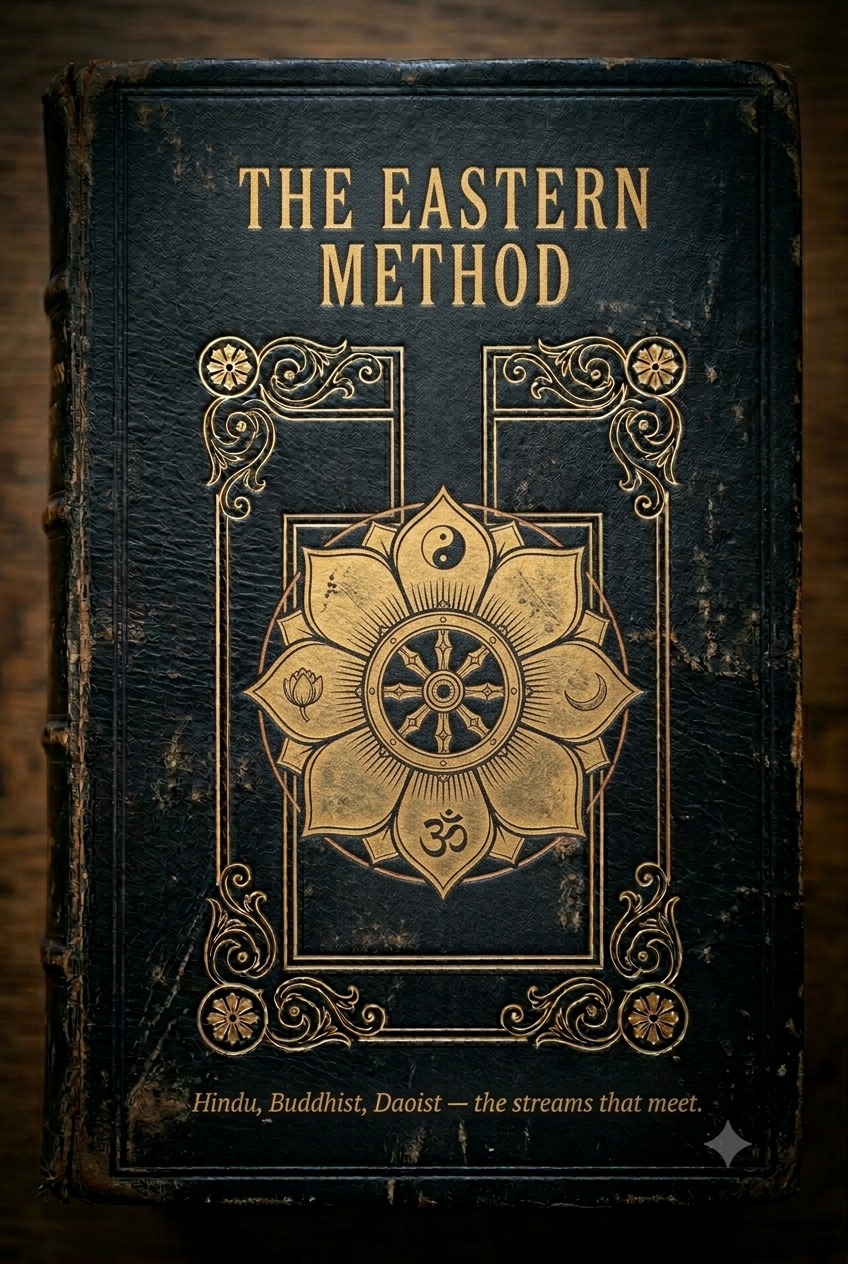
The rest of this book opens for the Magister.

See the paths and unlock it

Contents

  1. The Syncreticon Eastern Method
  2. Foreword — Of the Method, and Why It Has So Many Names
  3. The Four Motions
  4. The Cosmic Order
  5. Karma
  6. The Two Selves
  7. The Vedas and the Upanishads
  8. The Bhagavad Gita
  9. The Four Yogas
  10. The Three Gunas
  11. The Trimurti and the One Beyond
  12. Mantra
  13. The Buddha and the Four Noble Truths
  14. The Eightfold Path
  15. Anatta
  16. Anapanasati
  17. Zen
  18. The Bardo
  19. The Bodhisattva
  20. The Tao
  21. Wu Wei
  22. Confucius and the Rectification of Names
  23. The I Ching
  24. Inner Alchemy
  25. Shinto
  26. Sikhi
  27. Jainism
  28. Bon
  29. The Sufi Inheritance
  30. The Christian Mystics
  31. The Hebrew Mystics
  32. The Greek Mystics
  33. Death as the Great Teacher
  34. The Teacher and the Lineage
  35. Where the Streams Disagree
  36. What to Do Tomorrow

The full text opens with a subscription. Choose your path →